Let’s be honest. Non-alcoholic red wine is the hardest category to get right. While alcohol-free gin and spirits have genuinely improved in the last few years, NA red wine still feels like it’s fighting against the laws of physics. Red wine’s whole thing is tannins, body, and that slightly bitter grip at the back of your mouth. Strip out the alcohol and you’re left with a thinner, flabbier version of what made it interesting in the first place.
But some bottles are genuinely better than others. And if you’re sober, sober-curious, or just cutting back, you deserve to know which ones are worth the money and which ones you should actively avoid.
The Problem With NA Red Wine
Here’s what happens when you remove the alcohol. Alcohol adds weight, warmth, and a kind of mouth-filling sensation that’s hard to replicate. It also carries flavour compounds and helps preserve the wine. Take it out and you’re left with something thinner, often with a slightly sharp or vinegary edge.
Most supermarket NA reds taste like they’ve been boiled down or had all the interesting bits extracted. They’re thin. They’re often weirdly sweet. And they smell a bit like stewed fruit left too long in a plastic container.
The good ones? They’re rarer than you’d think. And they’re usually more expensive than the rubbish ones, which feels backwards but makes sense once you understand the chemistry.
Tesco’s Range: Hit and Miss
Tesco stocks a few options depending on your local store. Their own-brand Alcohol Free Red Wine (usually around £2.50) is fine if you’re genuinely desperate, but it’s thin and a bit jammy. It doesn’t offend, but it doesn’t do much of anything. Drink it chilled with pasta and you won’t hate it. That’s about the best compliment I can give it.
They sometimes stock Lussory, which is better. Lussory Red is actually one of the more reliable NA reds you’ll find in a supermarket. It’s got a bit more structure, a touch of actual tannin, and it doesn’t taste like cordial. You’re looking at around £3.50 to £4 a bottle depending on what Tesco’s doing that week. It’s worth the extra quid.
Waitrose: Where You Pay for Slightly Better
Waitrose’s own-label alcohol-free red (around £3.99) is respectable. It’s got more going on than the Tesco version. There’s actual fruit character, a bit of spice, and it doesn’t fall apart on the finish. If you’re a Waitrose regular anyway, it’s worth grabbing instead of the cheaper options.
They also stock Guinness 0.0 in some stores, which is a stout, not a red wine, but worth mentioning if you’re after something with actual body and bitterness. That’s genuinely good. But that’s not what we’re talking about here.
Ocado: The Specialist Stuff
If you’ve got an Ocado account, you’ve got access to better options. Seedlip makes a red wine alternative (around £6.50) that’s genuinely interesting. It’s not trying to be red wine exactly. It’s more of a sophisticated cordial situation with actual depth. Herbal, a bit spicy, with a dryness that actually works. It’s expensive for what it is, but it’s one of the few NA reds that doesn’t taste like a compromise.
Ocado also stocks Natureo, which is a Grupo Penafiel product that’s properly dealcoholised rather than made from a recipe. At around £5.50, it’s one of the better bottles you’ll find. It’s got tannins, proper wine structure, and it tastes like someone actually cared about making it. It won’t blow your mind, but it won’t disappoint either.
The Ones to Actively Avoid
Avoid anything under £2. Just don’t. The chemistry doesn’t work at that price point. You’re getting something that tastes like it’s been filtered through a gym sock.
Avoid Eisberg if you see it. It’s been around for years and tastes like it. There’s a peculiar plasticky note to it that lingers unpleasantly. Some people don’t notice it. Some people find it unbearable. I’m in the second camp.
Avoid anything with “fruit punch” or “berry” in the name. These are usually just juice with tannin powder added. They’re aggressively sweet and taste nothing like actual wine.
And avoid expecting too much. This is the key thing. If you go into an NA red wine thinking it’ll taste like the real thing, you’ll be disappointed. It won’t. It’ll taste like a clever imitation that’s about 70% of the way there. That’s actually pretty good for the category.
What Actually Works
The best NA red wines are the ones that don’t try too hard to be red wine. Seedlip’s approach (sophisticated, herbal, dry) works better than Natureo’s approach (trying to taste like a proper dealcoholised wine). Both are good, but they’re good in different ways.
If you want something to drink with dinner that feels a bit special, go for Natureo or Seedlip. You’ll spend £5.50 to £6.50 but you’ll get something that actually has character.
If you want something cheap to have with pasta or a takeaway, grab the Waitrose own-label or Lussory. You’re not going to love it, but you won’t regret it either.
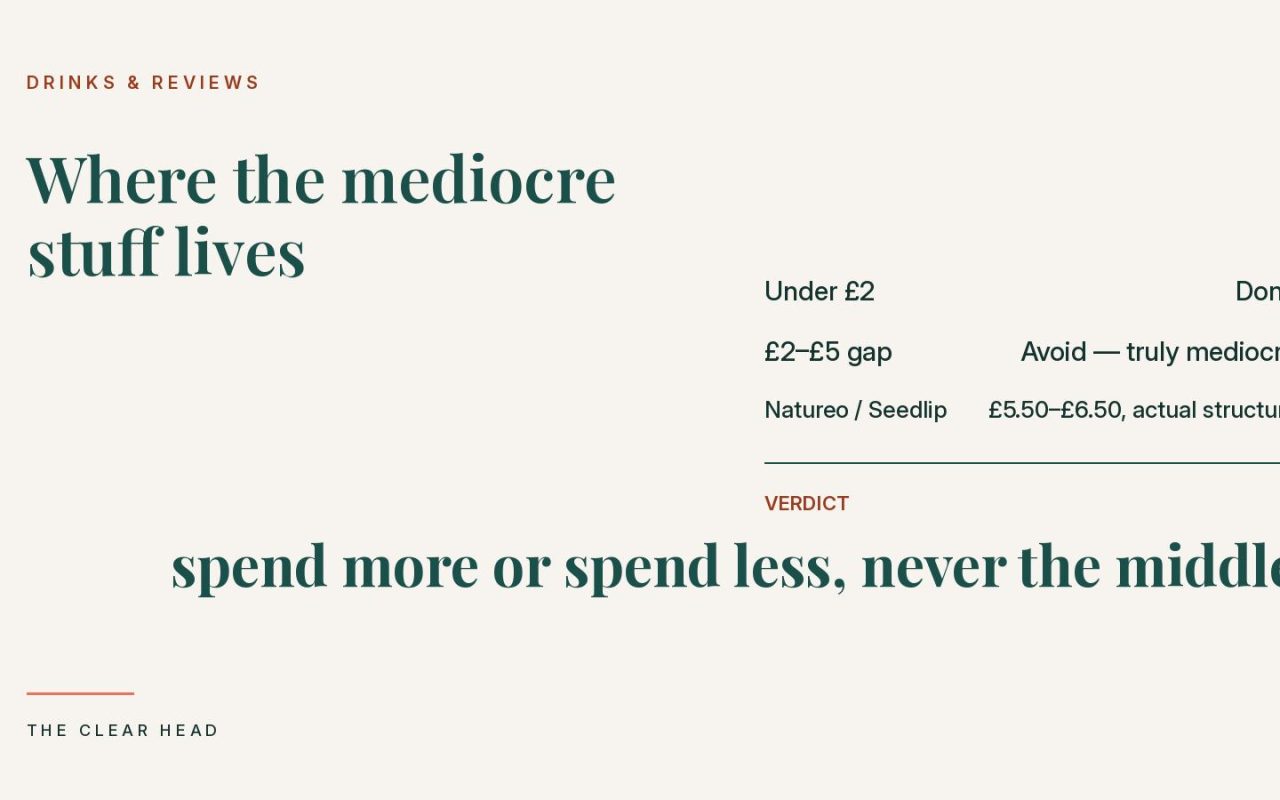
Don’t bother with anything in between. The gap between £2 and £5 is where the truly mediocre stuff lives.
The Honest Verdict
Non-alcoholic red wine is still a work in progress. It’s better than it was five years ago, but it’s nowhere near as good as NA gin or spirits have become. The chemistry is just harder. But there are bottles worth drinking, and there are bottles worth avoiding.
Spend a bit more, stick with Natureo or Seedlip, and you’ll have something genuinely pleasant. Cheap out on a supermarket own-label and you’re gambling. Sometimes you’ll get lucky. Sometimes you’ll pour it down the sink.
The category’s improving. In another few years, there might be NA reds that are actually brilliant. For now, we’re working with clever compromises. And that’s fine.
Compliance Note: This article contains general information and personal opinions about non-alcoholic beverages. It is not medical advice. If you have questions about alcohol or your health, please consult a healthcare professional. Drink responsibly.