
By Anna Patrowicz • Sommelier, Beverage Designer at Akub Notting Hill & Co-founder of Nabeeth
There is something wonderfully simple about sharing a beer. It can mark the end of a working day, accompany a meal or bring friends together around a table. But what happens when we remove the alcohol? Does the experience become any less meaningful?
As a sommelier and beverage designer, I believe quite the opposite. The growing interest in non-alcoholic drinks presents an opportunity to rethink how we approach flavour, hospitality and the rituals of drinking. It challenges us to create beverages that are genuinely enjoyable in their own right, rather than merely substitutes for something else.
And in a small Palestinian village in the hills northeast of Ramallah, one family has been exploring that possibility for years.
A Palestinian brewing story
Taybeh Brewery was established in 1994 by brothers Nadim and David Khoury, who returned from the United States to their family’s village with the ambition of building a Palestinian brewery.
Their timing was significant. The Oslo Accords had created a sense of possibility, and the brothers wanted to invest in their homeland, create employment and establish a product that could represent Palestine internationally.
What began as the first microbrewery in the Middle East has grown into a family business whose beers travel far beyond the village where they are made.
Today, the brewery’s story is closely associated with Madees Khoury, Nadim’s daughter, who grew up around the brewery before joining the family business and becoming its brewmaster.
Widely recognised as the first female brewmaster in the Middle East, Madees represents a remarkable combination of technical expertise, entrepreneurship and determination. She has helped carry the brewery into a new generation, preserving her family’s work while developing its products and international presence.
Among the brewery’s achievements is one that deserves particular attention: the development of a genuinely alcohol-free beer.
A beer that doesn’t need alcohol to have character
Creating a convincing non-alcoholic beer is far more complicated than simply removing one ingredient.
Alcohol contributes to the body, aroma and texture of beer. Without it, brewers must work carefully to achieve balance and retain the character that makes beer enjoyable.
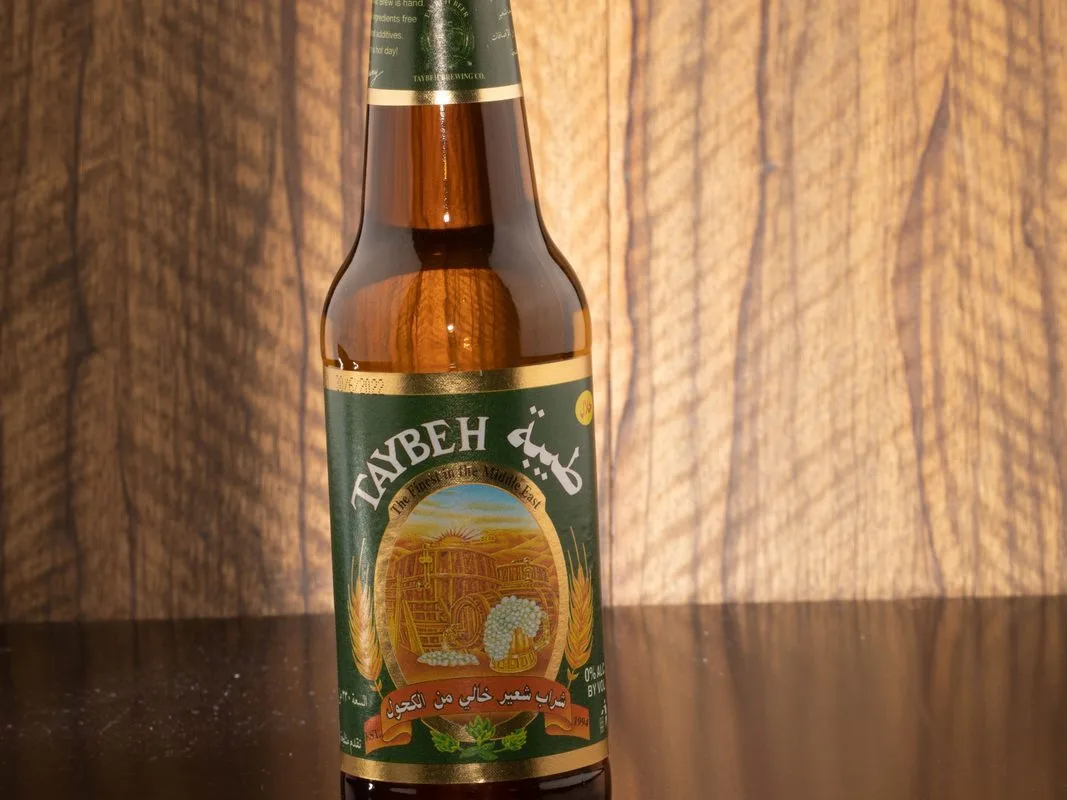
Taybeh developed its non-alcoholic malt beverage, containing 0.00% alcohol, through years of research and experimentation.
Made with malt and hops, it offers a distinctive expression of the brewery’s craft.
What I find particularly interesting is its malt-forward character. Rather than trying to imitate an aggressively bitter lager, Taybeh’s non-alcoholic beer embraces the natural sweetness and grain character of malted barley.
Its flavour profile is gently rounded, with cereal-like notes, a soft sweetness and a refreshing finish. Its golden appearance and lively carbonation make it approachable, while the malt provides a sense of substance and character.
It is a beer that invites us to reconsider what we expect from non-alcoholic brewing.
Not every non-alcoholic beer needs to replicate the taste of a conventional lager. There is room for different expressions, different balances of sweetness and bitterness, and different cultural interpretations of what beer can be.
Taybeh’s version is particularly interesting alongside food. Its malt character offers a pleasing contrast to salty cheeses, while its freshness works well with grilled vegetables, smoky aubergines and the acidity of pickles.
I particularly enjoy the idea of serving it alongside Palestinian mezze: labaneh with olive oil, warm mana’eesh with za’atar or a plate of Nabulsi cheese. These are combinations in which the beer becomes part of the meal rather than an afterthought.
And importantly, it can be enjoyed by people who choose not to drink alcohol for religious, cultural, health or personal reasons.
A beer rooted in the land
One of the most fascinating aspects of Taybeh’s brewing tradition is its relationship with water.
The brewery uses natural spring water from Ein Samiya, a spring in the hills near Taybeh. It is an essential part of the brewery’s identity and an important connection to the landscape in which the beer is produced.
As a sommelier, I find this relationship particularly meaningful.
In wine, we speak constantly about terroir: the relationship between a product, the land it comes from and the people who make it. We discuss soils, climate, altitude and the ways in which a particular landscape can shape what we taste.
Beer is rarely discussed in quite the same terms, yet water is its principal ingredient. Its mineral composition can influence the brewing process, flavour development and the perception of bitterness, body and balance.
For Taybeh, Ein Samiya represents something more than a technical ingredient. It is a physical connection between the brewery and its Palestinian landscape.
That connection also carries a difficult reality. Access to water in the occupied West Bank is deeply unequal, and Palestinian communities and businesses face restrictions and uncertainty over resources essential to everyday life.
The Khoury family has spoken publicly about the challenges of securing reliable access to water for their brewery. When such a fundamental resource becomes uncertain, the ability to maintain production is threatened.
It is a striking contradiction: a brewery whose identity is so closely connected to a local spring must navigate significant obstacles to secure the water it needs.
The malt, hops and brewing expertise are essential, but the water gives the story a particularly Palestinian dimension.
It reminds us that even the most ordinary ingredients can carry extraordinary meaning.
Bringing Palestinian flavours into mindful drinking
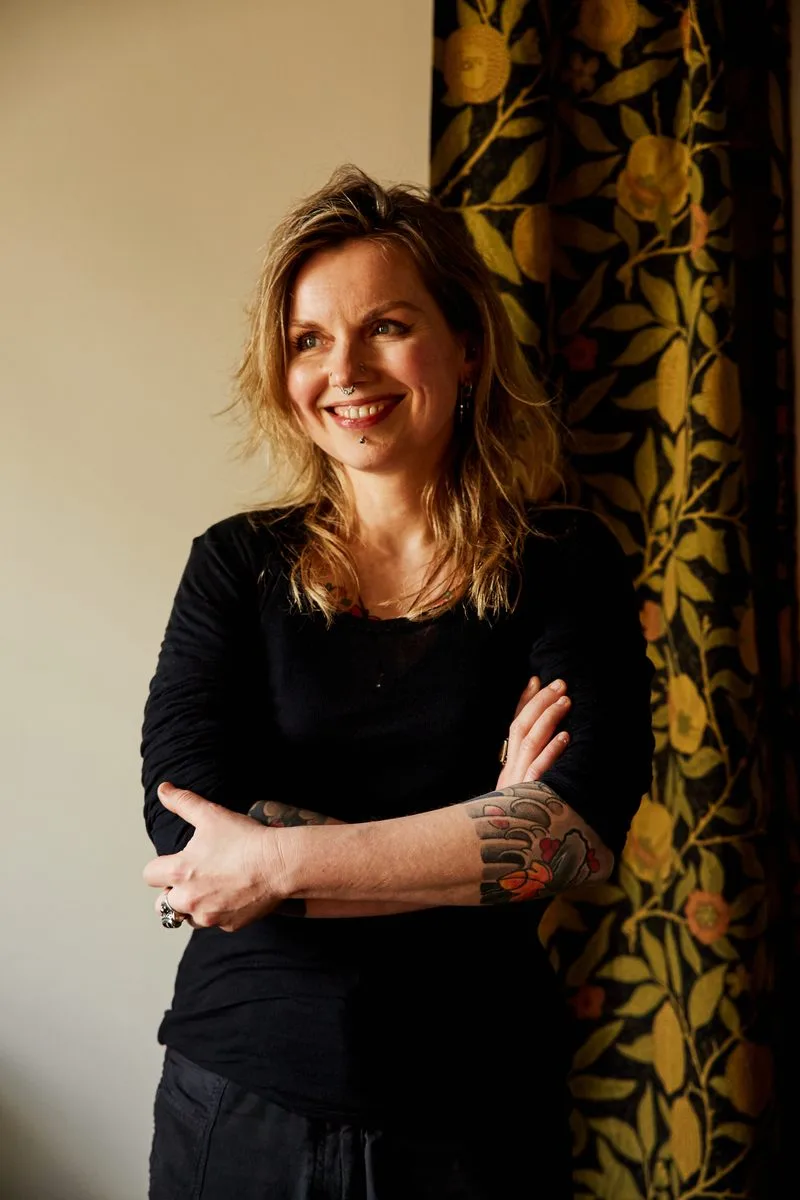
My own relationship with non-alcoholic beverages has developed through my work at Akub, the Palestinian restaurant in London’s Notting Hill, where I design the beverage programme.
Working alongside chef Fadi Kattan, I have been particularly interested in how we can bring the same sense of place, memory and culinary identity to drinks that we bring to food.
Palestinian food culture offers an extraordinary vocabulary of flavours, many of which are rarely explored in contemporary beverage programmes.
At Akub, I work with ingredients such as za’atar, sumac, sage, Arabic gum, qamardin and zhurat, drawing inspiration from the drinks, herbs and aromas that are part of everyday life in Palestine.
Za’atar brings an aromatic, earthy complexity. Sumac offers a vibrant, almost citrus-like acidity. Sage introduces a beautifully savoury, herbal character, while Arabic gum can contribute texture and a delicate sense of body.
Qamardin, the traditional apricot preparation so closely associated with Ramadan, brings concentrated fruit flavour and gentle tartness. Zhurat, the fragrant blend of flowers and herbs traditionally enjoyed as an infusion, offers an entirely different dimension: delicate, floral and deeply evocative.
What fascinates me is how these ingredients can be reinterpreted without losing their cultural identity.
When creating crafted non-alcoholic drinks, I approach them with the same attention I would give to a cocktail or a wine pairing. I think about acidity, sweetness, bitterness, texture and aroma, but also about memory and the emotions a flavour can evoke.
A drink should not simply be sweet and refreshing. It should have structure, complexity and a sense of progression on the palate. It should complement the food, sometimes echoing its flavours and sometimes offering a contrast.
For me, there is something particularly exciting about taking an ingredient associated with a grandmother’s kitchen, a traditional herbal infusion or a familiar Palestinian sweet, and allowing it to find a new expression in a contemporary glass.
This is not about reinventing Palestinian traditions for the sake of novelty. It is about recognising the sophistication that already exists within them.
I do not want guests choosing a non-alcoholic drink to feel that they are receiving a lesser version of the experience. I want them to discover something interesting, carefully considered and rooted in the same culinary culture as the food on their table.
This is why Taybeh’s non-alcoholic beer resonates with me. Although its approach is different from mine, the underlying philosophy is remarkably similar: a drink does not need alcohol to possess identity, craftsmanship, complexity or pleasure.
Hospitality without exclusion
The conversation around mindful drinking is sometimes framed as a recent lifestyle trend. Yet the desire for sophisticated non-alcoholic beverages is neither new nor exclusively Western.
Across the Middle East, elaborate traditions of non-alcoholic hospitality have existed for generations. Coffee, tea, fruit drinks, herbal infusions and fragrant syrups have long played central roles in welcoming guests and bringing people together.
In Palestine, offering someone a drink is an expression of hospitality, generosity and connection.
Taybeh’s decision to develop a non-alcoholic beer reflects this wider understanding of social drinking.
It also makes the brewery’s products accessible to a broader audience, including people who enjoy the flavour and ritual of beer but do not consume alcohol.
For me, this is what mindful drinking should ultimately be about: choice rather than restriction, pleasure rather than compromise, and inclusion rather than separation.
The most successful hospitality spaces are those where everyone at the table feels equally considered.
A village that celebrates gathering
The importance of community has always been central to Taybeh Brewery.
In 2005, the family launched Taybeh Oktoberfest, transforming their village into a gathering place for music, food, dance, local producers and visitors from different backgrounds.
Inspired by the German festival but distinctly Palestinian in spirit, it became an expression of the village’s creativity and hospitality.
It also offered something particularly precious: a space in which Palestinians could gather, celebrate and enjoy the ordinary pleasures of life.
The brewery’s non-alcoholic beer fits naturally into this philosophy. It broadens the possibility of participation, allowing people with different drinking preferences to share in the same experience.
The drink itself is only one part of the story. What matters just as much is the space it helps create.
From Palestine to British tables
Through Nabeeth, the UK-based importer and distributor I co-founded, I have the privilege of working with Palestinian producers and helping their products find a place in the British market.
Our ambition has always been about more than importing bottles. We want Palestinian wines and beers to become part of the everyday hospitality landscape, to be discovered and enjoyed in restaurants, wine bars, independent shops and people’s homes.
For Taybeh’s non-alcoholic beer, this is particularly exciting.
The growing interest in mindful drinking has created an audience curious about flavour, craftsmanship and provenance. Yet the non-alcoholic offering in many establishments remains surprisingly limited.
I believe there is a place for a Palestinian non-alcoholic beer alongside the best independent beers and thoughtfully crafted alcohol-free beverages available in the UK.
We work to introduce these products to restaurants where they can be paired with food, to wine bars where guests are looking for something different, and to independent retailers who value the stories and craftsmanship behind what they sell.
Our online shop allows us to reach an even wider audience across the UK, including people who may not live near a restaurant or shop that stocks Palestinian products.
This matters because visibility creates familiarity.
A customer who discovers Taybeh in a restaurant might look for it again in a shop. Someone who orders a few bottles online might introduce it to friends over dinner. A wine bar that includes Palestinian beer on its menu creates an opportunity for conversations that might otherwise never happen.
These seemingly small encounters are how a product becomes part of a wider drinking culture.
But there is another dimension to this work that is equally important.
For producers in Palestine, developing international markets is not simply about recognition. It is about creating opportunities for sustainable business, generating revenue, supporting employment and building relationships that can endure beyond individual orders.
The Palestinian economy operates under extraordinary constraints. Restrictions on movement, difficulties accessing international markets and the costs associated with occupation place enormous pressure on independent businesses.
Every successful export relationship represents an opportunity to build greater economic resilience.
When a restaurant chooses to list a Palestinian beer, when an independent shop decides to stock it, or when a customer orders it online, that decision becomes part of a much larger chain of economic activity.
It supports the possibility of continued production, investment and growth.
I am particularly conscious of the difference between buying a Palestinian product as a one-off gesture of solidarity and making it part of a regular purchasing decision.
Solidarity can introduce someone to a product. But quality, consistency and genuine enjoyment are what encourage them to return.
That is the kind of relationship we want to build through Nabeeth.
We want Palestinian producers to be recognised not only for the circumstances in which they work, but for the excellence of what they create.
And we want their products to have a lasting place in the international market, not as occasional curiosities, but as bottles that people actively seek out, recommend and enjoy.
A different kind of drinking culture
When I think about the future of drinking, I do not imagine a world in which alcohol disappears. I imagine one in which the choices become more interesting.
A beautifully crafted non-alcoholic drink should be as thoughtfully presented as a glass of wine. A non-alcoholic beer should be selected for its flavour, character and suitability for the occasion.
And the people who make these drinks should be recognised for the same creativity and expertise we celebrate in winemakers, brewers and distillers.
Taybeh Brewery offers a compelling example of this approach.
From the spring water of Ein Samiya to the brewery in Taybeh, from the herbs and flavours I work with at Akub to the bottles finding their way onto British restaurant tables and into people’s homes, these drinks carry stories of place, creativity and belonging.
They remind us that mindful drinking can be about much more than the absence of alcohol. It can be about the ingredients we choose, the people who produce them, the cultures they represent and the connections we create by sharing them.
For me, the future of drinking is not simply about what we choose to leave out of the glass.
It is about everything we can bring to it.
About the Author:
Anna Patrowicz is a sommelier and beverage designer based in London. She oversees the beverage programme at Akub, the celebrated Palestinian restaurant in Notting Hill, and is the co-founder of Nabeeth, an independent UK importer championing authentic Palestinian wines, beers, and artisanal beverages.