The Typical Weekly Drinker: Pints at the Pub
Let’s start with someone who goes to the pub twice a week. Not a heavy drinker by any measure — just a regular Friday and Saturday night thing. Three pints each time, at £5.50 a pint (fairly standard for a decent pub outside London). That’s £33 a week.
Over a year, that’s £1,716.
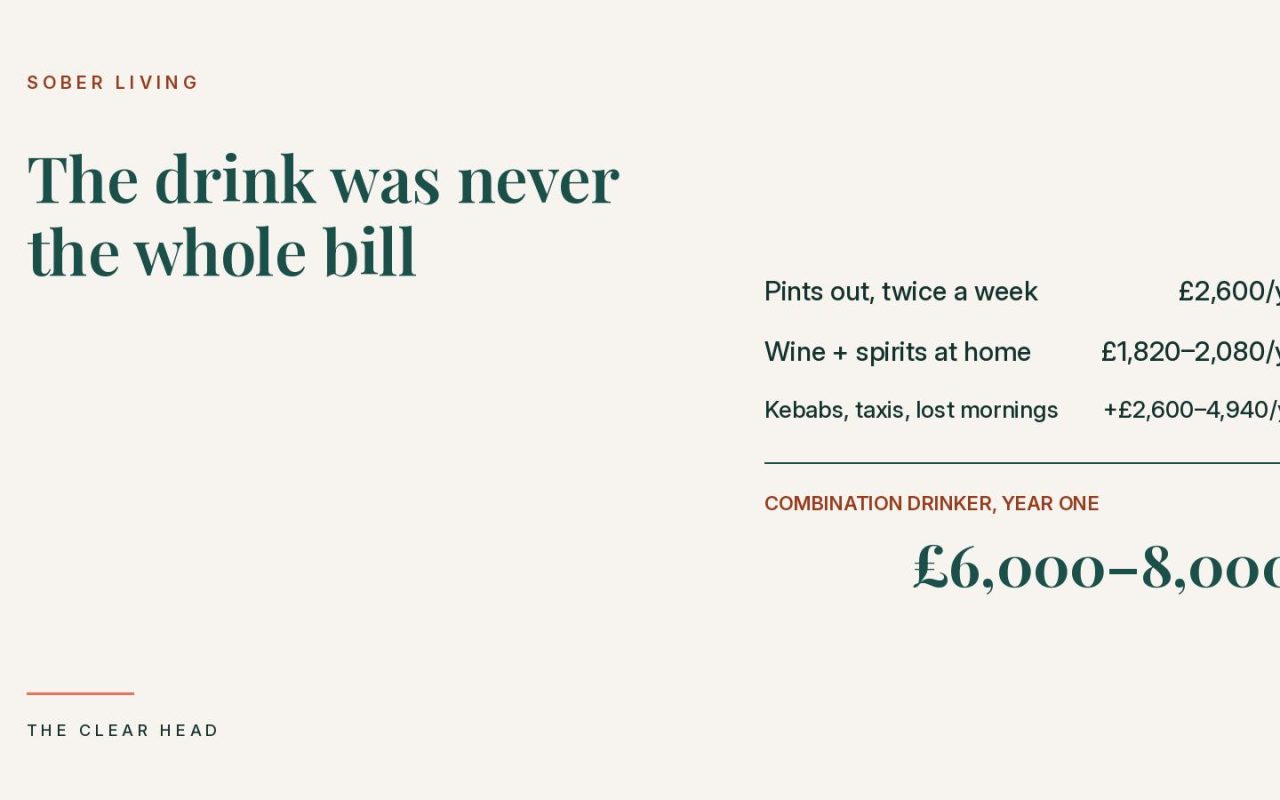
But here’s where it gets interesting. Most pub drinkers also buy a round or two for friends, grab a packet of crisps, maybe eat a meal. Let’s say the actual spend is closer to £50 a week when you factor in that stuff. That’s £2,600 a year.
If you quit drinking tomorrow and put that £50 a week into a savings account earning 4% interest (which you can get from somewhere like Chip or a decent instant-access savings account), you’d have £2,704 after twelve months. Not life-changing, but it’s a holiday. A decent one.
The Home Drinker: Wine and Spirits
Now let’s look at someone who drinks at home. Probably more common these days, especially post-pandemic. A bottle of wine from Tesco or Sainsbury’s costs between £7 and £12. Let’s say you drink two bottles a week. That’s £18 to £24 weekly, or roughly £1,000 to £1,250 a year.
Doesn’t sound like much until you add in the other stuff. Gin and tonic at home? A bottle of decent gin is £30 to £40, and you might get through one every three weeks. That’s another £10 a week. Prosecco at weekends? Another £5 to £8 a week.
Suddenly you’re at £35 to £40 a week, or £1,820 to £2,080 a year.
The home drinker often spends less per unit than the pub drinker, but they also drink more consistently. The maths gets less rosy if you’re someone who’s been quietly getting through a bottle of wine most nights. That’s £8 a bottle times seven days: £56 a week. £2,912 a year.
The Combination Drinker: Bit of Both
Most people don’t fit neatly into one category. You might have a couple of glasses of wine at home during the week, then go out for a proper session on Friday and Saturday. Let’s say that’s £25 a week at home and £45 out, so £70 total.
That’s £3,640 a year.
Over five years, that’s £18,200. Over ten years, it’s £36,400. That’s a car. That’s a deposit on a house in some parts of the country. That’s a year of your mortgage.
But Wait. There’s More.
The direct cost of alcohol is only part of it. When you stop drinking, you also save on things that aren’t strictly alcohol-related but definitely cost more when you’re drinking.
Takeaways. A drunk 11pm kebab is £8 to £15. If you go out twice a week, that’s £16 to £30 extra a week. Over a year, that’s £832 to £1,560.
Taxis and Ubers. If you’re going out drinking, you probably can’t drive home. An Uber home from town is £12 to £25 depending where you live. Twice a week is £24 to £50. That’s £1,248 to £2,600 a year.
Hangovers. You don’t go to the gym, you buy expensive coffee, you order lunch instead of making it, you skip the meal prep you’d planned. Hard to quantify, but let’s say another £10 to £15 a week. That’s £520 to £780 a year.
So if you’re the combination drinker, you’re actually spending closer to £6,000 to £8,000 a year on alcohol and alcohol-adjacent stuff. Over a decade, that’s £60,000 to £80,000.
The Reality
Yes, quitting drinking saves you money. How much depends entirely on your habits. If you’re a two-pints-a-week person, it’s a few hundred quid a year. Nice, but not transformative. If you’re someone who’s been drinking regularly at home and going out on weekends, it could be several thousand a year.
The other thing worth knowing: most people don’t immediately redirect that money into savings. They spend it on something else. But that’s a different problem, and at least you’re choosing what that something else is instead of it being alcohol.
The money is real. Whether it matters depends on what you’re replacing the drinking with — and whether you wanted to quit for other reasons anyway. The financial bit is just a bonus.
Compliance note: This article is for informational purposes only and does not constitute financial advice. If you’re concerned about your drinking or considering stopping, please speak to your GP or contact a support service such as Alcoholics Anonymous or SMART Recovery.